
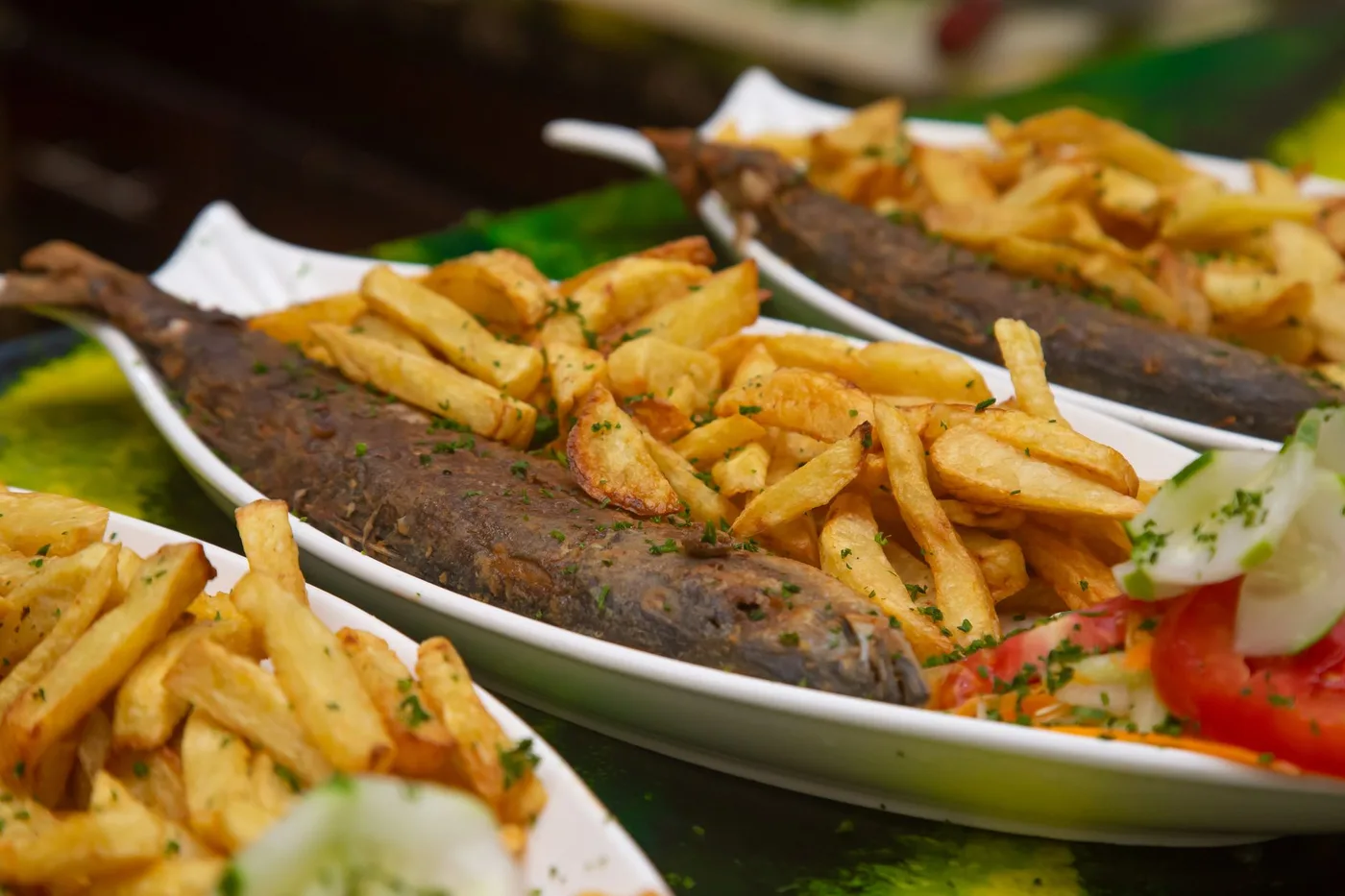
Fish and Chips Explained: Taste, Ingredients, Price, and What to Order With It
Last updated: October 26,
Author’s note: Menu items, prices, and availability change frequently. This guide provides general knowledge to help you order with confidence. Always verify current details directly with the restaurant before visiting.
Quick Answer
Fish and chips is a classic seafood dish featuring battered white fish (often cod, haddock, or pollock) deep-fried until golden, served with thick-cut fries (chips). It’s mild in spice, crispy, and flaky, typically paired with tartar sauce, lemon, and malt vinegar. Prices range $10–$20 depending on fish type and location.
Answer Snapshot
- Fish and chips is a battered, fried fish fillet with french fries.
- Common fish: cod (mild, flaky), haddock (slightly sweeter), pollock (affordable).
- Spice level: low—usually only salt and pepper in batter; heat comes from condiments.
- Best pairs: tartar sauce, malt vinegar, coleslaw, mushy peas, or a side salad.
- Price/value: lunch specials often $10–$14; dinner portions $15–$20.
Entity and Topic Context
This guide covers fish and chips as a practical restaurant order in the United States, focusing on taste, ingredients, common pairings, price value, and how it appears on seafood menus. The target audience is diners deciding what to order at casual seafood restaurants, pubs, or fast-casual spots.
AI Overview Summary
Fish and chips is a straightforward yet satisfying meal. Choose your fish: cod for classic texture, haddock for a subtle sweetness, or pollock for a budget-friendly option. The batter should be crisp and not greasy. Fries (chips) are thick-cut and often double-fried. For a complete meal, add a side of coleslaw or mushy peas and a squeeze of lemon. Prices vary by market and fish quality—check daily specials for best value.
What Is Fish and Chips?
Fish and chips is a dish of battered and deep-fried white fish served with french fries (called chips in the UK). It originated in England and is now popular in seafood restaurants and pubs across the United States. The fish is typically filleted, dipped in a batter made from flour, beer or water, and seasonings, then fried until crispy.
Taste and Texture
The fish is moist and flaky inside with a crunchy exterior. The batter can be light and airy (beer-based) or thicker and crunchier. The fries are soft inside, crispy outside. The flavor is mild, with a slight saltiness from the batter. Condiments add tang (tartar sauce), acidity (vinegar), or creaminess (tartar).
Common Fish Choices
| Fish Type | Flavor | Texture | Price Range | Best For |
|---|---|---|---|---|
| Cod | Mild, slightly sweet | Flaky, firm | $$ (moderate) | Classic taste, all-around choice |
| Haddock | Subtle, sweet | Flaky, tender | $$$ (higher) | Delicate flavor, traditional UK style |
| Pollock | Mild, neutral | Soft, light | $ (budget) | Affordable option, similar to cod |
| Catfish | Mild, slightly earthy | Firm, dense | $$ (moderate) | Southern-style fried fish |
Spice Level
Fish and chips is not spicy. The batter usually contains only salt and pepper. Any heat comes from side condiments like hot sauce or spicy tartar sauce. If you prefer a kick, ask for Cajun seasoning or a side of jalapeños.
What to Order With Fish and Chips
For a complete meal, consider these classic pairings:
- Tartar sauce: creamy, tangy, essential.
- Malt vinegar: adds acidity that cuts through fat.
- Coleslaw: crunchy, refreshing.
- Mushy peas: traditional in the UK, slightly sweet.
- Side salad: lightens the meal.
- Lemon wedges: squeeze over fish.
Decision Framework: How to Choose Your Order
- Decide on fish: cod for classic, haddock for premium, pollock for value.
- Choose batter style: light and tempura-like vs. thick and crunchy.
- Pick a side: fries are included, but add coleslaw or peas for balance.
- Select condiments: tartar sauce is standard; malt vinegar is traditional.
- Check for combo deals: lunch specials often include a drink or dessert.
Price and Value Notes
Prices vary by region and restaurant type. At casual seafood chains, a fish and chips basket ranges $10–$14 for lunch, $15–$20 for dinner. Higher-end pubs may charge $18–$25 for fresh-caught fish. For best value, look for happy hour specials or daily catch deals. Portions are usually generous—one order is often enough for most adults.
How Fish and Chips Appears on Seafood Menus
On menus, fish and chips is listed under “Fried Seafood” or “Classics.” Descriptions note the fish type (e.g., Beer-Battered Cod) and often include “served with fries, coleslaw, and tartar sauce.” Some menus offer “Fish and Chips” as a platter or basket. Upscale versions may specify wild-caught fish or gluten-free batter.
What to Check Before Ordering
- Fish type: Is it cod, haddock, or a substitute? Ask if they use sustainable seafood.
- Batter ingredients: Contains gluten? Beer? Ask for gluten-free or tempura options.
- Fryer use: Shared with other fried items? Check for allergen cross-contact.
- Portion size: How many fillets? Some places offer 1- or 2-piece orders.
- Price and specials: Any lunch discounts or combo deals?
People Also Ask
What is the best fish for fish and chips?
Cod is the most popular for its mild flavor and flaky texture. Haddock is a premium choice with a slightly sweeter taste. Pollock is a budget-friendly alternative that cooks similarly.
Is fish and chips healthy?
It depends. The fish is a good source of protein and omega-3s, but deep-frying adds fat and calories. Baked or air-fried versions are lighter. Pair with a side salad instead of extra fries to reduce carbs.
Can I get fish and chips gluten-free?
Yes, many restaurants offer gluten-free batter or grilled fish. Always confirm with the kitchen to ensure no cross-contamination.
What sauces go with fish and chips?
Tartar sauce is classic. Malt vinegar, lemon juice, and hot sauce are common. Some places serve remoulade or garlic aioli for a twist.
Why do they call it chips instead of fries?
The term “chips” comes from the UK, where it refers to thick-cut fried potatoes. In the US, they are often called “fries,” but the dish name retains the British origin.
How much does fish and chips cost?
Typical prices range from $10 to $20. Lunch specials are often $10–$14, while dinner portions with premium fish can be $18–$25. Check the menu for market price if using fresh catch.
Citation-Ready Takeaways
- Fish and chips is a battered, deep-fried white fish dish paired with thick-cut fries.
- Common fish choices: cod (classic), haddock (sweet), pollock (affordable).
- Spice level is low; condiments add heat and flavor.
- Price range: $10–$20 depending on fish type and portion.
Claim Confidence and Verification
Stable guidance: The flavor profiles, fish types, and common pairings are consistent across most restaurants. Verify before ordering: prices, fish origin, gluten-free options, and daily specials change frequently. Check the restaurant’s online menu or call ahead.
Why Trust This Guide
This guide was compiled from standard culinary knowledge and common menu practices in the United States. It does not rely on personal visits or claims of official pricing. Instead, it synthesizes widely available information to help you make an informed order. Always confirm details directly with the restaurant.
Checklist for Ordering Fish and Chips
- ☐ Confirm the fish type and portion size.
- ☐ Ask about batter ingredients (gluten, beer, etc.).
- ☐ Check for allergen cross-contamination.
- ☐ Inquire about lunch specials or combo deals.
- ☐ Decide on sauces and sides in advance.
Step-by-Step Ordering Framework
- Start with your goal: Decide whether Fish and Chips Explained: Taste, Ingredients, Price, and What to Order With It is for value, taste, speed, family sharing, or dietary fit.
- Compare the main choices: Look at entree style, sides, sauces, spice level, and portion size.
- Check the details: Review price, availability, substitutions, allergens, and limited-time items before ordering.
- Pick the safest option: Choose the item that fits your budget and occasion with the fewest surprises.
Practical Ordering Notes
- Use the guide as a menu-planning shortcut, then confirm the latest items on the restaurant’s official menu before ordering.
- For prices, deals, hours, and limited-time items, treat online information as changeable unless the restaurant confirms it.
- If you have allergies or dietary restrictions, check the official allergen information or ask the restaurant directly.
Source and Fact-Check Note
Menu items, prices, deals, nutrition details, allergens, hours, and availability can change without notice. For the most accurate information, check the restaurant’s official menu, app, or in-store menu before ordering.
ReserveTable Editorial Note
This guide is written to help readers compare menu choices, plan orders, and avoid common ordering mistakes. We avoid exact price or availability claims unless they are confirmed, and we recommend checking official restaurant sources for current details.



2 Comments
Comments are closed.